warehouse-management-systems-socius24-logo-whitered

NEWS

Keep up to date with our regular news posts.

socius24-fav-white

“Our Implementation was as close to painless as it was possible to get. We couldn’t have done it without Socius24.”

– Smart Garden Products

“By upgrading to the latest version of Dispatcher WMS we have been able to fully leverage the power and flexibility of this platform … and ensure we deliver the best possible service in a highly efficient manner.”

– Versteijnen

This is how voice picking technology combined with Dispatcher WMS can help your warehouse boost productivity. It does exactly what it says on the tin: warehouse staff use voice prompts instead of visual devices, like RDTs, to guide their tasks.
Read more
At Socius24, we’ve been developing the kinds of microservices that are designed to extend and enhance the capabilities of Dispatcher WMS… and we’re delighted to tell you that our microservices help our clients stay ahead of their competition.
Read more
XPO Logistics, a global leader in supply chain management, wanted to increase their operational efficiency and meet the complex demands of its European customers. Socius24 helped them do this by deploying Dispatcher WMS across XPO's facilities.
Read more
Waste is one of those hidden drains on warehouse efficiency that doesn’t just quietly eat into your profits. If it’s left unchecked, it becomes a problem that can stop your business growth in its tracks. And it’s not always obvious where the losses are, either.
Read more
Your profit margins aren’t the only thing that are negatively impacted by warehouse waste. It slows everything down, frustrating your teams, and throttling your business’ growth. And the worst part about the whole thing? Most warehouse waste hides under the radar and goes completely unnoticed.
Read more
Twelve years is a long time in any industry, and even more so in the mad, mad world of logistics and warehouse management. But for the last dozen years, Socius24 has been at the forefront of shaping what’s possible in WMS. And during that time, we’ve redefined how businesses manage
Read more
UK Sustainability Regulations - are you up to date with the UK Sustainability Standards for warehousing and logistics? Use our Checklist now!
Read more
One of the best things about being in business is being able to support causes that we believe to be important. Which is why we back the Daventry Town Football Club Titans and why our very own Mathew Russ is their coach.
Read more
Sustainability in Logistics isn't just a buzzword - this is how Socius24 created a carbon footprint that’s 99% lower than the average business.
Read more
The Supply Chain is experiencing a constant and almost universal challenge at the moment – reducing operational expenses while at the same time boosting efficiency. You have to maintain seamless service levels, DESPITE all the chaos that the outside world brings into your warehouse. This is how to do it.
Read more

Interested in a free demonstration of Blue Yonder Dispatcher WMS?

Socius24. Warehouse Management Software Solutions

warehouse-management-software-solutions-socius24

How voice picking technology combined with Dispatcher WMS can help boost warehouse productivity

Have you already implemented Voice Picking in your warehouse? If you have, then you should congratulate yourself on being well ahead of the curve. Hopefully you’re already seeing gains in picking speed and accuracy.

There are very few tools available to the modern warehouse that combine the kind of simplicity and efficacy of voice picking technology. It does exactly what it says on the tin: warehouse staff use voice prompts instead of visual devices, like RDTs, to guide their tasks. Then, instead of typing or scanning into the system, they respond verbally to confirm their actions. Voice picking technology keeps hands and eyes free, it’s safer to move around when your operators are looking where they’re going, and all the while, they’re keeping your WMS updated in real-time.

This might sound like a subtle change, but the impact that it can have on speed, accuracy, and training time is significant. And when voice picking technology is integrated properly – meaning that it’s been tailored to the way your warehouse actually runs – it can quickly become one of the most efficient tools in your tech stack.

Why voice picking works so well

Basics first though – in a traditional picking process, your warehouse operator might be juggling a paper list, a handheld device, or possibly both at the same time. And it’s obvious how that kind of setup could slow things down or at least open the door to avoidable errors.

Voice picking technology takes away that friction. Workers are given tasks via headset and then they confirm the individual steps taken by using simple voice commands. They don’t have to stop and look at a screen, they stay focused, they keep moving, and they’re able to be fully engaged in what they’re doing.

All of this comes together in a way that typically means Voice operators can pick faster, and with fewer mistakes.

Bringing voice picking into Dispatcher WMS

These days, it’s an unusual WMS that works in isolation. Voice picking is the same – and in fact, voice picking tech only achieves its true potential when it’s properly integrated with your Warehouse Management System… which is where Dispatcher WMS comes in.

What makes it work so well

Voice picking itself is clever, but as mentioned above, the magic only really starts to happen when it is connected to wider systems. It needs to understand your workflows. It needs to adapt to your teams. And it needs to deliver data back into your WMS in a way that’s useful, rather than messy.

Which is why your Dispatcher WMS – Voice Picking interface matters.

And it’s also why we’re often brought in to lead or support these kinds of projects. We understand Dispatcher WMS inside and out, obviously. But after thirty years’ experience of deploying it around the world (and over every vertical), we also understand the pace, pressure, and precision that warehouse environments need to maintain – even through changes like this.

At Socius24, we’ve helped lots of clients add voice functionality to their Dispatcher WMS environment. We’ve built new interfaces, adapted existing workflows, and we’ve configured the system to connect with third-party voice platforms.

And because we work so closely with the Dispatcher WMS architecture (and have done from the very start), we’re able to make these integrations cleanly – without disrupting everything else that’s already in place.

Real-world results: voice picking in action

A good example is our work with this major UK retailer, who saw a significant productivity uplift after switching to voice-directed picking. Working with them, we integrated voice functionality into their existing Dispatcher WMS setup. This increased picking speeds and reduced onboarding time for new staff. This resulted in fewer errors on the floor, and smoother shift transitions across the operation.

We also worked alongside Dakota to deliver voice-directed solutions for the DCS Group, an FMCG operator with high-volume, fast-moving operations. During that project, we handled the interface between Dispatcher and Dakota’s voice system. The result was a measurable boost in throughput, without the team needing to overhaul how they worked.

We were also proud to work on the WMS integration for a major Pet store retailer, as part of their broader logistics transformation project. Again, our focus was on building a Dispatcher WMS interface that could support voice picking at scale – and to do it in a way that supported the day-to-day realities of the warehouse.

We’ve also just gone live with a warehouse safety equipment manufacturing who combined Automation with Voice for productivity and safety improvements.  And last year, we helped a frozen and fresh food 3PL with their operations.

Voice picking, when it’s done properly, helps your warehouse to work more smoothly. And it also helps your operators to work smarter, rather than harder.

Thinking about implementing voice picking?

If you’re exploring voice-directed technology, and you want to understand what it could look like in your environment, we’re always happy to share what we’ve seen work (and what we’d do differently next time). Get in touch today to organise an informal chat – info@socius24.com

If you’ve enjoyed this article, subscribe to our weekly Newsletter
 – The World of WMS –
for more of the same great information!

Why WMS Microservices?

The way that most businesses manage their Warehouse Management Systems (WMS) is evolving all the time. Right now, for example, warehouse managers are concentrating on increasing the flexibility and efficiency of their operations – they need to do this in order to be able to react to the current Supply Chain. But they also need to be able to seamlessly integrate diverse areas of their systems stack, because it’s very rare, these days, to find a WMS that works in total isolation.

Which is why at Socius24, we’ve been developing the kinds of microservices that are designed to extend and enhance the capabilities of Dispatcher WMS… and we’re delighted to tell you that our microservices help our clients stay ahead of their competition.

Three of our latest innovations – eBilling, USP (User Services Portal), and our new mobile app – were designed to streamline operational processes. They’ve been designed with an intuitive interface that makes the user experience more configurable. They were built to give businesses even more visibility over their operations.

And because we take the quality of our products extremely seriously, both eBilling and USP are Blue Yonder approved products, which means that they meet the highest standards for Dispatcher WMS integration. Our Mobile app is still being rolled out, but once it is, you can be sure that we’ll be submitting that for Blue Yonder approval too.

To give you a little bit of history – eBilling was created for businesses that run complex 3PL warehouse operations. For businesses like these, invoicing and billing can be a real headache, so eBilling was designed to take the pain out of the process by automating invoicing directly from Dispatcher WMS (or any WMS, in fact). Doing this has helped users to eliminate manual errors and improve billing accuracy.

Through integration with Dispatcher WMS real-time data, users can generate invoices that are based on actual warehouse activities. This helps to reduce disputes, obviously – but it also means faster, more reliable billing cycles. At the same time, it provides a ready-made audit trail for compliance.

And because eBilling is Blue Yonder approved, businesses can trust that it seamlessly integrates with existing WMS processes, offering a smarter, faster way to manage billing. However, interestingly enough, eBilling is WMS agnostic so it can be used with any Warehouse Management System. You can find out more about it here.

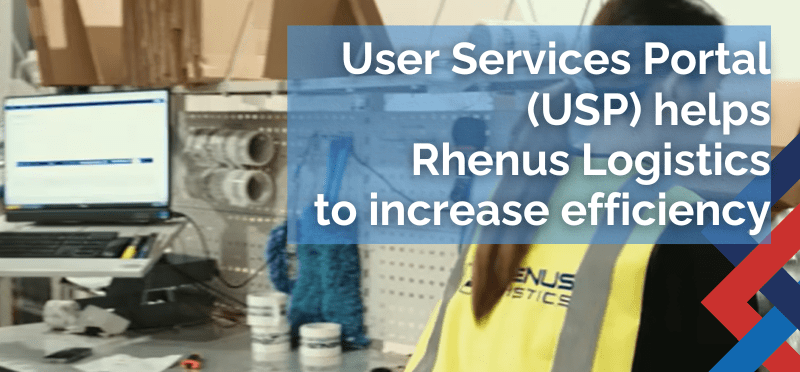
The USP (User Services Portal) offers customisation without complexity. We’ve been doing this for long enough to know that the one-size-fits-all approach never works in warehouse management. And that’s why we developed USP (User Services Portal). It’s a fully configurable interface that allows businesses to adapt Dispatcher WMS to their individual needs without involving complex coding or development work.

With USP, users can create custom workflows, bespoke dashboards, and specialised reporting tools. This means that they can get exactly the information they need, precisely when they need it. And whatever our customers need to do; be that to tailor screens for their warehouse teams or refine data access for decision-makers, USP brings additional control and visibility to their operations. You can find out more about it here.

Again, as a Blue Yonder approved product, you can be sure that USP has been built to work seamlessly within Dispatcher WMS environments. This, in turn, makes it easier than ever to fine-tune warehouse processes without disrupting operations.

And finally, our new Mobile App is a WMS-lite in your pocket. We know that speed and accessibility are critical in modern warehouse operations, which is why we’ve been working on something really exciting – a new mobile app that puts Dispatcher WMS functionality directly into the hands of remote warehouse teams and satellite stores.

The app is designed for on-the-go efficiency, and allows users to:

  • Access specific real-time warehouse data from anywhere.
  • Manage key WMS functions through an intuitive mobile interface on regular Android or IOS mobile phones. (so, no need to purchase additional RDT’s)
  • Improve communication and response times within the warehouse team.

We thought it was time to take WMS mobility to the next level, so now we can offer our customers the tools they need to stay connected, stay efficient, deploy rapidly and stay ahead.

These days, microservices really do matter – rigid, one-size-fits-all systems have gone the way of the dinosaurs. Instead, microservices like USP, eBilling and the Mobile app allow businesses to build personalisation directly on top of their existing WMS. Bringing with them agility and flexibility, these apps also offer options for customisation that don’t require overhauling an entire system.

At Socius24, we’re developing microservices that solve real-world warehouse problems, and those microservices can make your WMS even more adaptable and user-friendly.

So, if you’re looking to make your WMS more efficient, flexible, and future proof, we’re always happy to chat. Email us today to learn more about eBilling, USP, and our new mobile app—and see how microservices can transform your warehouse operations: info@socius24.com

XPO Logistics, a global leader in supply chain management, wanted to increase their operational efficiency, increase stock accuracy with Dispatcher WMS, and meet the complex demands of its European customers. To achieve this, they implemented Blue Yonder’s Dispatcher Warehouse Management System (WMS), a comprehensive solution designed to streamline warehouse operations. Socius24 helped in this transformation by deploying Dispatcher WMS across XPO’s facilities.

Key Outcomes:

Stock Accuracy with Dispatcher WMS: Post-implementation, XPO Logistics achieved a remarkable 99.9% stock accuracy for certain customers, setting new industry benchmarks.

Operational Expansion: The success of Dispatcher WMS led to its deployment across 15 UK sites, with further expansion into European markets, including Spain and Ireland.

Enhanced Productivity: The integration of Dispatcher WMS improved warehouse efficiency, allowed XPO to better synchronise warehouse and transportation operations, which contributed to meeting the intricate supply chain requirements of their clientele.

Nigel Rouch, Senior Vice President of Technology – Europe at XPO Logistics, highlighted the significance of this collaboration – click here to see what he said.

The deployment of Dispatcher WMS by Socius24 has been instrumental in the XPO Logistics’ journey towards operational excellence, automation, and sustainability within the logistics sector.

Waste is one of those hidden drains on warehouse efficiency that doesn’t just quietly eat into your profits. If it’s left unchecked, it becomes a problem that can stop your business growth in its tracks. And it’s not always obvious where the losses are, either. I mean, walking around a warehouse, you can see discarded packaging or damaged stock, but waste in warehousing typically runs much deeper than a bit of rubbish lying around.

Here are some suggestions about how to reduce warehouse waste in 2025:

Other ways, more serious ways, that waste can show up is in issues like Labour management inefficiencies, poorly optimised inventory processes, unnecessary energy usage, and outdated systems.

Taking labour inefficiencies, for example: are your workers constantly doubling back (à la snakes and ladders) around the warehouse, because your pick paths haven’t been properly optimised? Or are they spending significant amounts of time correcting errors that were created by the manual processes they’re having to use instead of a WMS? If so, that’s time and money straight down the drain.

Then there are the common bear traps of dealing with inventory. Stock that expires, gets damaged, or just doesn’t move fast enough – it’s all eating into your valuable storage space and adding to your carrying costs.

Energy waste is another huge factor in today’s warehouse. Warehouses are energy-hungry, and when equipment is left running unnecessarily – or when space is heated and it doesn’t need to be, those energy costs quickly stack up.

And while all of this is going on, opportunities to improve and scale are missed, leaving businesses struggling to keep up with more efficient competitors. It’s a double whammy of waste.

The good news is that with the right tools and strategies, this kind of waste can be eliminated. Systems like Dispatcher WMS were designed to cut through inefficiencies like a hot knife through butter. Because it was created with the intention of providing the control and visibility that ambitious logistics businesses need… if they’re going to make real, tangible improvements.

Deploying Dispatcher WMS isn’t only about tracking inventory or assigning tasks – it’s also about creating a streamlined operation that works as efficiently as possible. Its functionality is so rich that there’s barely a moving part of warehousing that it can’t optimise. And that functionality has been baked into the product over the years, so you can pick and choose the exact configuration that your business needs for its next step. And then you can pick the one you want after that, and after that. Without needing to change your WMS.

Scalability is one of its superpowers.

For example, Dispatcher WMS can help your workers to optimise picking and packing processes by assigning tasks dynamically. This means that it reduces unnecessary movement through the warehouse, which in turn influences your fuel bill.

It can also make sure that your stock levels are aligned with expected demand, avoiding the pitfalls of overstocking or understocking – and all of the cost waste and lost income that goes with those particular pitfalls.

Sustainability plays a huge role here, too. These days, waste reduction isn’t simply a cost-saver—it’s what your customers and stakeholders have come to expect. The push toward greener practices is growing, and businesses that embrace this push are starting to create a real competitive edge. Dispatcher WMS supports efforts such as these by highlighting inefficiencies and helping businesses focus on areas where they can reduce their environmental impact.

Ignoring waste issues like these isn’t really an option anymore. A warehouse that doesn’t address its inefficiencies is going to see its costs rise in 2025, its profits shrink, and its reputation take a hit.

But by tackling waste head-on, businesses can pave the way for better performance, smarter systems, and sustainable long-term growth. Which means that deploying something like Dispatcher WMS doesn’t just solve today’s waste crises – it also sets you up for success in the future.

Let us know if you’d like more information – info@socius24.com

If you’ve enjoyed this blog, claim your free subscription to our LinkedIn weekly Newsletter
 – The World of WMS
for more of the same great information!

How to cut warehouse waste to cut costs.

Your profit margins aren’t the only thing that are negatively impacted if you can’t cut warehouse waste. It slows everything down, frustrating your teams, and throttling your business’ growth.

And the worst part about the whole thing? Most warehouse waste hides under the radar and goes completely unnoticed.

There are some obvious ways to cut warehouse waste – things that are easily noticed by the naked eye. Like discarded packaging and excess inventory. But waste also hides itself inside unoptimised processes that cause inefficiencies. It hides behind unnecessary movement, putting and picking issues that create rework, and it obscures underutilised resources that could save you money if you used them to their full potential.

However… when you’ve got complete visibility over every single moving part of your warehouse, you can start to eliminate waste at its source. And that kind of visibility, funnily enough, is exactly what Dispatcher WMS offers you.

Seeing waste for what it really is

Warehouse waste isn’t just that pile of empty boxes carelessly slung in the corner at the end of the day. It’s mis-picks that require rework, and it’s pickers walking unnecessary miles. Waste is overstocked inventory that’s gathering dust or going out-of-date before you can ship it. And it’s energy-hungry equipment left running when it’s not needed. These things add up fast, but they don’t always scream “waste” when they’re happening.

And that’s why data matters.

Dispatcher WMS doesn’t simply track operations (in real time), it also helps you see where time, money, and resources are being drained – so that you can put a stop to it.

The Biggest Warehouse Waste Offenders (and how to eliminate them)

  1. Wasted Travel Time

If your pickers are zig-zagging across the warehouse instead of following an optimised route, then you’re burning time and money. Alternatively, Dispatcher WMS could dynamically assign pick paths that are based on real-time demand, order priorities, and stock location. And in one fell swoop, this could cut out wasted movement and boost your productivity without burning out your team.

  1. Overstocking and Understocking

Carrying excess stock that doesn’t sell is a waste of space (and money). But at the opposite end of the spectrum, stockouts mean lost sales. Dispatcher WMS helps you to make sure that your inventory levels align with demand. And this, in turn, reduces your carrying costs, and helps you to avoid last-minute, expensive replenishments.

  1. Inefficient Packing and Shipping

Packaging waste isn’t just bad for your bottom line, it’s bad for the environment too. Dispatcher WMS optimises cartonisation, making sure that your orders are packed using the right-sized materials. This minimises void fill, and it reduces unnecessary weight, which helps cut down your shipping costs.

  1. Energy Waste

Warehouses are energy-hungry, but they don’t always need to be. Leaving conveyor belts running, keeping lights on in unused zones, or inefficient cooling systems all add up. And advanced WMS can integrate with smart warehouse tech that reduces energy consumption where possible, cutting costs and boosting sustainability.

  1. Rework and Returns

Mistakes in picking, packing, or labelling cause delays, and they cost money to fix. Dispatcher WMS enforces accuracy at every stage, reducing mis-picks, improving scanning compliance, and it makes sure that shipments go out correctly, first time. This, in turn means fewer returns, less rework, and happier customers.

Turning Insights into Action

Data on its own isn’t enough. You’ve got to cut waste to cut costs. And the real power of Dispatcher WMS is that it transforms insights into action. Every scan, every movement, and every order feeds into a system that adapts to the information it has, and makes your operations leaner, faster, and ever more efficient. Which means that instead of reacting to problems, you can get ahead of them, fixing inefficiencies before they start to eat into your margins.

The Future is Lean, and It’s Data-Driven

Ignoring warehouse waste is hazardous to your profit margins. Costs are rising, competition is fierce, and your customers expect more and better and faster. Warehouses that aren’t actively reducing inefficiencies are already falling behind. But the ones that have harnessed real-time data and optimisation tools are cutting waste and unlocking new levels of efficiency, scalability, and profitability.

The big questions are: What waste is your warehouse hiding? And are you ready to cut warehouse waste to cut costs?

If you’re ready to take back control, let’s talk. info@socius24.com

With nearly 12 years of innovation, Socius24 is shaping the future of WMS.

Next month, Socius24 will celebrate its 12th anniversary.

Twelve years is a long time in any industry, and even more so in the mad, mad world of logistics and warehouse management. But for the last dozen years, Socius24 has been at the forefront of shaping what’s possible in WMS. And during that time, we’ve redefined how businesses manage their operations and set benchmarks for innovation and industry leadership.

From the very start, we understood the assignment, and our mission was clear: to deliver real, tangible solutions that made a difference to the people and businesses that rely on warehouse management systems every single day. And we’ve stayed true to that.

Over the years, we’ve been lucky enough to partner with forward-thinking companies across industries, from retail giants to logistics specialists, and together, we’ve pushed the boundaries, solved thousands of challenges, and helped shape the way WMS works today.

It all starts with the Customer

One thing we’ve always known is that innovation can’t happen in a vacuum. Every new solution, every feature we’ve added to User Services Portal, every process we’ve reimagined has started with one simple question: “How can we make this better for our customers?”

It doesn’t matter if we’re automating complex processes, unlocking greater efficiencies in the warehouse, or giving teams the tools that they need to make life easier and operational excellence more accessible – every improvement we’ve made has been driven by real-world needs.

Take, for example, the evolution of inventory management. Twelve years ago, the focus was on keeping count and avoiding stockouts. Now? It’s about predictive analytics, real-time visibility, and systems that don’t just keep track but actively help businesses plan for what’s next. That shift didn’t happen overnight, it came from listening to the challenges customers faced and finding ways to solve them.

Leading through change

The past twelve years have brought some seismic shifts in the logistics landscape. E-commerce exploded and sustainability went from a ‘nice-to-have’ to a business requirement. And then there was the global pandemic – which upended supply chains and made them visible to the Rest of the World (AKA people outside of the industry) for the first time. And through it all, we’ve worked side by side with our customers to navigate every bump in the road and take advantage of every opportunity that has arisen.

We’ve helped businesses adapt to skyrocketing order volumes due to the exponential growth of eCommerce, we’ve helped customers integrate greener practices into their operations, and we’ve built systems flexible enough to handle the unexpected. And while every challenge has been unique, there’s been one constant that has run through the whole thing: the importance of having a WMS partner who doesn’t just help you to keep up with your competitors, but rather – to find one who helps you stay ahead of the pack.

Is your WMS Partner like this?

So, when you think about what you need from a WMS partner, what comes to mind? For us, it’s about more than ‘software’. We believe that it’s really important to have someone in your corner who truly understands your business, your industry, and where you want to go. We think that it’s crucial to work with someone who can bring fresh ideas to the table, who can anticipate challenges before they arise, and who can help you find smarter, better ways of working.

We believe that in order to be able to bring those fresh ideas to the table, your WMS Partner needs to have deep industry experience. They need to know what works, what doesn’t and how all of that knowledge and expertise can be combined with the latest innovations.

Over the last (very nearly) twelve years, we’ve aimed to do exactly this. We don’t see ourselves as people who sell you WMS software – but rather, we see ourselves as your long-term partner. We deliberately teach you how to be self-sufficient, but we’re always there in the background if you need something that you can’t handle or don’t want to handle in-house.

We’ve invested heavily in innovation over the years, building a platform in User Services Portal that’s as scalable as it is powerful. We’ve worked tirelessly to make sure that our customers are able to meet their current demands, and we’ve tried to make sure that they’re equally ready for what tomorrow might bring, opportunity-wise.

Shaping the future

Looking ahead, we believe that the future of WMS is about more than simply keeping up with the evolving technology. So, we’re going to continue to push the envelope, to ask what’s possible, and to deliver solutions that genuinely transform businesses. From advanced automation to AI-driven insights, we’re convinced that the next decade promises some exciting changes, and we’re ready to continue to lead the way.

To everyone who’s been part of our journey so far: thank you. You’ve helped us grow, to innovate, and to push ourselves to be better. And to those who are thinking about what’s next for their WMS, we’d love to show you what a dozen years of innovation looks like In Real Life.

If you’re ready to rethink what’s possible in your warehouse, let’s talk – info@socius24.com. Here’s to the next twelve years of shaping the future, together.

If you’ve enjoyed this blog, claim your free subscription to our LinkedIn weekly Newsletter
 – The World of WMS
for more of the same great information!

This isn’t a comprehensive list of UK Sustainability Regulations

but it is a start… so here’s our quick guide to help you tick the required boxes and start to make sure your warehouse is aligned with UK sustainability regulations. If we’ve missed any, be sure to let us know!

Energy Efficiency Measures

Are you monitoring energy usage across your operations?

Have you implemented LED lighting and motion sensors?

Is your equipment running on energy-efficient settings, or are you still operating outdated systems?

Waste Management Compliance

Do you have a clear waste segregation and recycling policy in place?

Are hazardous materials being disposed of safely and in line with legal requirements?

Is there a plan for reducing packaging waste, both inbound and outbound?

Water Usage

Are you monitoring water consumption in your warehouse?

Do you have water-saving devices installed, like low-flow taps or leak detection systems?

Carbon Emissions

Have you assessed your carbon footprint and set reduction targets?

Are your delivery and transportation routes optimised to cut emissions?

Do you have a plan to transition to electric vehicles or greener alternatives?

Employee Awareness and Training

Are your teams trained on sustainable practices?

Do you encourage employees to actively participate in energy-saving and waste-reduction initiatives?

Sustainable Procurement

Are you sourcing products and services from suppliers who meet sustainability standards? Like us, for example – we have a carbon footprint that’s on average 99% lower than other WMS providers.

Have you reviewed your supply chain for potential areas to improve eco-friendly practices?

Building Standards

Does your warehouse comply with BREEAM or other sustainability assessment frameworks?

Are you using insulation and natural ventilation to reduce energy demand?

Technology and Automation

Have you implemented systems like Dispatcher WMS to streamline operations and cut waste?

Are you using predictive analytics to manage inventory efficiently and avoid excess stock or obsolescence?

Sustainability Reporting

Do you track and report your sustainability metrics regularly?

Are these reports accessible to stakeholders and aligned with industry benchmarks?

Government Incentives and Legislation

Are you up to date on available grants or incentives for green initiatives?

Are you aware of key regulations like the Energy Savings Opportunity Scheme (ESOS) or SECR?

UK sustainability regulations:

Meeting legal UK sustainability regulations is (obviously) important, but part of the point of meeting them is to stay ahead of the curve by reducing costs and building a reputation as a responsible business. This is only going to get more important.

If you’d like to to learn how systems like Dispatcher WMS could help you with this, get in touch today – info@socius24.com

If you’ve enjoyed this, make sure to claim your free subscription to our LinkedIn weekly Newsletter  – The World of WMS –
for more of the same great information!

Backing the Causes That Truly Matter

One of the best things about being in business is being able to support causes that we believe to be important. Which is why we back the Daventry Town Football Club Titans and why our very own Mathew Russ is their coach.

If you found this interesting, claim your free subscription to our LinkedIn weekly Newsletter
 – The World of WMS –
for more of the same great information!

Have you been looking for a way to immediately (and easily) lower your business’ Carbon Footprint?

Then you need to read this – if only to find out where most of your business’ carbon footprint is coming from.

Because – spoiler alert – it might not be YOUR business

Socius24 is known for having the most experienced and knowledgeable Dispatcher WMS sales, implementation and support team, trusted by customers all over the world. We’ve been doing what we do for a very long time.

But it might not be quite as obvious to the naked eye that we’re also deliberately leading the industry toward Net Zero – and a significantly greener future.

Sustainability is something that’s important to us, and it should be important to you. Even if that’s just from a financial perspective. So here, we’re going to explain how you can get a big win, fast, when it comes to minimising your business’ carbon footprint.

Did you know that Socius24 were recently classified by Climate Essentials as having a carbon footprint that’s 99% lower than the average business? 

Probably not, because depending on when you’re reading this, we only started talking about it in October 2024, which is just after we were assessed for our 2022 year.

but… 99%!

We’re really proud of the sustainability initiatives that we followed to achieve this result, but we’re equally as proud of the immediate and direct impact that our eco-friendly initiatives have had on our customers’ operations and their bottom line.

Our focus on sustainability contributes to their sustainability scores in a very real and tangible way; because just by working with us (rather than another, less ‘green’ WMS provider), they’re already reducing their carbon footprint.

The way that Climate Essentials (using the guidelines laid down by the Greenhouse Gas Protocol) calculates a business’ emissions is laid out like this:

  • Scope 1 Emissions: these are the emissions that your business creates from the fuel it burns on your premises or in your vehicles.
  • Scope 2 Emissions: these are the emissions that are produced by the energy you use that’s been generated by someone else (e.g. the electricity your business uses).
  • Scope 3 Emissions: these are the emissions that have been generated across your WHOLE value chain.

Scope 3 emissions are created during the production of the products and services that your business buys and by the waste that’s created in your business… PLUS they include all of the waste (and emissions) created by all of the businesses involved in the products and services that you’re using in your business operations.

Typically, Scope 3 Emissions account for 75% to 95% of the emissions that your business is responsible for generating.

Which means that if you choose a provider who has a TINY carbon footprint, then you get to attribute it to your own carbon footprint. Or rather, you don’t get dragged down by someone else’s carbon footprint. Because who wants that?

Socius24 have a tiny carbon footprint.

Deliberately.

We’re happy to tell you how we do it… keep reading.

And while it’s nice that we’ve been recognised by climateessentials.com – because our carbon footprint is 99% lower than the average WMS provider – we want you to know that we started doing this way back before it was trendy. Socius24 was built like this from the get-go, more than a decade ago. This recognition is just the latest way of being measured for what we do every day.


So, we’ve got a question for you; is your WMS Provider as green as us?

Might be worth asking. 

Because you’ve probably already got enough to worry about with your own carbon footprint. So, it’d be a pity if you had to take on the responsibility of theirs too (please see definition of Scope 3 Emissions, above) wouldn’t it?

In contrast, working with us means that your business gets to stand out as a champion of sustainability. And that’s a position that will likely resonate very powerfully with your customers and stakeholders.

We’ve worked hard to ensure that our sustainability initiatives don’t add complexity to your operations. We’ve made the way that we deploy Blue Yonder’s Dispatcher WMS as easy as possible, so that your team experiences minimal disruption. Our support team is always here, ready to help you through every step, making sure that your journey to increased sustainability is smooth, reliable, and as stress-free as it can be.

And we’re in it for the long-term. We’ll support your eco-journey as we help you deploy your new (or upgraded) Dispatcher WMS, but we’d really like to become your long-term partner… because that means that your operations can remain sustainable and compliant as regulations evolve.

But we know that talk is cheap and that anyone could (and probably will) tell you they’re sustainability champions too, so here’s exactly how we achieved a 99% lower carbon footprint than our competitors:

  • We don’t have office premises – so no lights and heating.
  • We don’t have to commute to our non-existent office – so no fuel emissions.
  • We do as much of our ‘business travel’ online as we can – so we dramatically minimise our fuel consumption (and, incidentally, your costs).
  • And we’re a paperless business – so we don’t kill any trees. In fact, when we implement Dispatcher WMS, we help our customers reduce their paper usage too.

Leaders work with other leaders, and Socius24 is leading the way to a greener future.

Which means that if you’re looking for an easy way to RAPIDLY reduce your business emissions, then we’d suggest you come talk to us about your next deployment. We’re looking forward to chatting with you: info@socius24.com

If you’ve enjoyed this article, make sure to claim your free subscription to our LinkedIn weekly Newsletter
 – The World of WMS –
for more of the same great information!

Cutting Costs, Not Corners – Smart WMS Investments for Lean Operations

It’s competitive out there right now. To succeed, you need to be able to optimise processes, cut time and costs, and sustain business growth… and you need to be able to do all of this without compromising the quality of your warehouse operations.

It’s a constant and almost universal challenge at the moment – reducing operational expenses while at the same time boosting efficiency. You have to maintain seamless service levels, DESPITE all the chaos that the outside world brings into your warehouse.

No one said it would be easy, but does it really have to be this hard?

Well, actually… no, no it doesn’t.

What you need is some smart technology. Specifically, you need an advanced WMS. And even more specifically, you need something that’s robust – like Dispatcher WMS.

Advanced WMS

An advanced WMS like Dispatcher WMS isn’t just another tool for managing inventory. Think of it as a strategic asset. Just to start off with, it’ll help you to automate workflows so that everyone can be using best practices. Imagine that… you work out what’s the best way to do something and then everyone actually does it.

Real-Time Data

Then, as well, it gives you real-time tracking so that you can make decisions on what’s actually happening – rather than what you suspect might be going on. And that real-time tracking then becomes historical data so that you can learn from it, evolve and adapt to situations, and even be able to anticipate them next time.

Data-driven decision making

It’s what you need to streamline operations and reduce your costs. It’s a tool to empower you to make informed decisions… and make them quickly, so that you can reduce any unnecessary expenditure. It’s what’s going to help you with that sustainable growth you want to create, and it’s what’s going to help you manage your warehouse with precision – even as the world around you fluctuates wildly.

Want some proof?

Incidentally, it’s not just us who thinks this. We have plenty of case studies to back it up. They’ll show you, in real terms, how technology adoption has brought with it significant savings, enhanced productivity and strategic growth. Over the years, Dispatcher WMS has become synonymous with lean, cost-effective warehouse operations. And Socius24 has become synonymous with expert deployment.

Sustainable Growth

But making an investment in this kind of software goes beyond cost-cutting – it sets up a foundation for sustainable growth and operational excellence. Choosing an advanced WMS is a substantial step that you can take towards future-proofing your business… especially in today’s ever-evolving economic environment.

Moving to a best-in-breed WMS like Blue Yonder’s Dispatcher WMS is a reflection of broader industry trends towards leaner and more resilient operations, but it’s also a strategic decision. And for warehouse managers who want to replicate the same level of success that Dispatcher WMS users around the world have experienced, the message is clear – embracing an advanced WMS is the way forward.

As a warehouse manager, your needs extend way past mere operational improvements. You want strategic growth. You want to be at the forefront of technological innovation, and you want to be able to use advanced systems like Dispatcher WMS to create a competitive edge for your business.

In the future, your warehouse environment could be directed by decisions that are data-driven, and processes that have been streamlined. If you’re ready to explore how Dispatcher WMS can revolutionise your warehousing operations, email us on info@socius24.com for a no obligation, free of charge demo. 

We’re ready, are you?

If you’ve enjoyed this article, claim your free subscription to our LinkedIn weekly Newsletter
 – The World of WMS –
for more of the same great information!