warehouse-management-systems-socius24-logo-whitered

NEWS

Keep up to date with our regular news posts.

socius24-fav-white

“Our Implementation was as close to painless as it was possible to get. We couldn’t have done it without Socius24.”

– Smart Garden Products

“By upgrading to the latest version of Dispatcher WMS we have been able to fully leverage the power and flexibility of this platform … and ensure we deliver the best possible service in a highly efficient manner.”

– Versteijnen

Throughout Europe, and especially in the UK, there’s a silent threat that’s been slowly growing ever more urgent over the last few years; the labour shortage. Read our in-depth analysis about how an advanced WMS can help.
Read more
We are very proud to announce that our very own Craig Jones has been nominated for the MD of the Year Awards 2024 by SME News
Read more
The final part of our four part series about using Advanced WMS to optimise E-Commerce Operations. In this article, we’re talking about sending that stuff you originally received (in the previous articles) out into the world.
Read more
In this article, we’re going to talk a bit more about moving inventory around your warehouse, why you might want to do that, and how an advanced WMS can help you do it in the most effective and efficient manner possible
Read more
Socius24 are exhibiting at IntraLogisteX 2024 - and we'd love to have a chat with you if you're looking to upgrade or implement Blue Yonder's Dispatcher WMS - or if you'd like to find out how to augment its functionality through our own mobile application, User Services Portal (USP).
Read more
In part one of this series, we talked about a couple of different ways that e-commerce receipts can be made easier and more accurate. Today, we’re moving on from the receipt dock, and talking about how you can start to deal with your newly received inventory in a way that
Read more
E-commerce fulfilment comes with its own set of challenges, not least the number of returns that you have to deal with. Read part one in our series that talks about how to optimise e-commerce operations by using an Advanced WMS like Dispatcher WMS.
Read more
We’re very pleased to announce that Socius24 is now Cyber Essentials certified. We took the decision to go through this certification process proactively in order to protect our own data, and that of our customers.
Read more
Dispatcher WMS - award-winning resellers Socius24 to showcase Blue Yonder Warehouse Management System at IntraLogisteX 2024
Read more
As global trade becomes more complex, the demand for a clear view of operations, from raw material sourcing to the delivery of the final product, has become paramount. And there are many reasons why visibility and transparency have evolved to be so important. This is what they can do for
Read more

Interested in a free demonstration of Blue Yonder Dispatcher WMS?

Socius24. Warehouse Management Software Solutions

warehouse-management-software-solutions-socius24

Labour Shortages; throughout Europe, and especially in the UK, it’s a silent threat that’s been slowly growing ever more urgent over the last few years.

In the UK, especially, demand for semi-skilled workers has been building for some time, but of late, it’s become rather less silent and rather more of an insistent threat. And while there are plenty of people who are touting automation as the solution to every labour problem, it’s becoming increasingly clear that the robots aren’t going to solve all of our problems.

Labour shortages aren’t just a hiccup. 

This issue isn’t just a glitch in the matrix. It’s a full-blown people crisis that’s affecting both productivity, and by extrapolation, economic growth. The problem in the UK is particularly acute and it’s resulted in a significant gap in semi-skilled labour that’s leaving businesses scrambling to find suitable workers.

And it’s not just about filling positions… this is a problem that’s shaping how we keep the wheels of UK industry turning. The Supply Chain is one of the most affected sectors – which means it’s a problem that’s very much beginning to bite.

In recent years, automation has really come into its own. 

I mean, who DOESN’T love watching robots running up and down racking, picking, and putting away? But automation isn’t the universal solution that we all imagined it might be.

It has its place, certainly, but there’s a nuance in the work provided by real life human beings that robots simply can’t replicate. It might be the finesse required in handling delicate goods, or it might be the adaptability and flexibility that’s required in peak seasons.

Certainly, the robots can do a lot. But they can’t do everything.

And the further down this road we travel, the more it’s starting to look as if they won’t be able do enough, or at least – not in time to save us from a labour crunch.

And, let’s face it, automation isn’t a cheap option. And given that (in our experience, at least) many warehouses are seasonally driven, if your robotics system is going to be able to cope with the peaks, then that expensive MHE kit you bought is probably going to be gathering dust for at least some of the year.

Now, we (Socius24) have been in this industry for a while. Some of us are so long in the tooth that we even vaguely remember watching the Original Robot in black and white, as kids – “Danger, Danger, Will Robinson!” (if you don’t know what I’m talking about, watch this). And it’s fair to say that we’ve seen plenty of advancements in the warehouse industry over the years. But the changes that we’re possibly the most excited about are the ones that can boost productivity and efficiency by elevating the roles of semi-skilled workers.

Labour Shortages – where a WMS comes in.

If you get the right one, configured correctly, it’ll enhance the skills of your team. It’ll help them manage and operate the sophisticated systems that are going to drive your business forward into the future. And that sweet spot of synergy, the one that you have to find in order to create the forward motion your business needs to survive, is where your technology and your talent meet.

Now… don’t get me wrong. I am a massive fan of automation. It’s got its place, and when it’s integrated with the right WMS, it can create a hybrid that will leverage the strength of both systems. There’s a lot of very impressive and exciting tech out there, and you can achieve remarkable efficiencies when you marry up the right software with the right robot hardware.

But for businesses that are staring down the barrel of labour shortages right now, this minute, today – the writing is on the wall. And that writing says ‘You need to look at where an advanced WMS can streamline your operations. Stat’.

But make sure you pick that WMS carefully – my advice would be to look for scalability and flexibility. Find something that has a proven track record. And remember that implementation is only the start. Training and developing your workforce to harness the full potential of your WMS is where the real transformation begins, and where your real ROI will be achieved.

So, yes, labour shortages in Europe are an issue. 

And it’s one that’s not going anywhere, anytime soon. But as with all problems, there’s an opportunity inside of it – and in this case, that opportunity is one for innovation and strategic thinking.

Which means that if you’re looking for a path forward, and you want to choose a path that enhances productivity, optimises your operations, and empowers (rather than replaces) your workforce, then perhaps it’s time for you to look at an advanced WMS like Blue Yonder’s Dispatcher WMS?

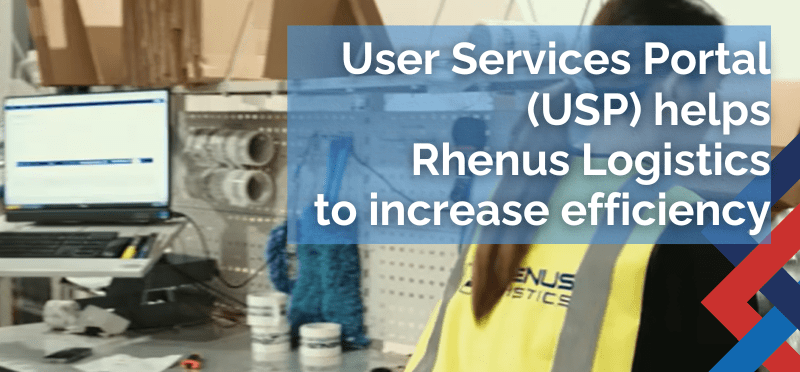
But just one last thing before I go – if you come and talk to us about implementing Dispatcher WMS, then we can also show you our homegrown User Services Portal. That’s our mobile application software, which was designed to support and enhance Dispatcher WMS.

It’s a solution that was created specifically to support a semi-skilled workforce. It was built with an intuitive interface that reduces training and onboarding time from days to hours. It’s ideal for operations that either need to rapidly scale up their workforce through agency staff or move their own staff around within the operation. And it makes interacting with a WMS easier and faster – meaning that you don’t have to be an expert to be effective.

And the other (very important) thing about USP is that you can flex the licences up and down as needed to support the staff levels you have. Which means that when you’re at peak you can pay for what you need, and then when you’ve not got so much going on, you can reduce the number of licenses again.

Can you do that with your Robotics system? Didn’t think so.

Anyway, if you’re currently stuck in the labour shortage trenches, and if it’s affecting your productivity (and by extrapolation your profitability), then we have a message for you:

The future is bright, and it’s powered by an advanced WMS.

If you’re ready to embrace the change, invest in your people and watch your operations grow (rather than shrink alongside the labour pool), then let’s talk.

Reach out to us on info@socius24.com and let’s turn challenges into opportunities, together.

If you’ve enjoyed this article, sign up to our LinkedIn weekly Newsletter (delivered via email)
 – The World of WMS –
for more of the same great information!

We are very proud to announce that our very own Craig Jones has been nominated for the MD of the Year Award 2024 by SME News.

The Managing Director of the Year Awards aim to recognise outstanding leaders who have made significant contributions to their organisations and have shown exemplary leadership qualities.

Please join us in congratulating Craig on this well-deserved nomination


Conquering E-Commerce with an Advanced WMS – Part Four

So far in this series, we’ve talk about how you can use an advanced WMS to set up your receiving (be that returned goods or not) properly, so it’s easier to be successful later down the line. And we’ve talked about what you can do with that inventory immediately after it’s been received. And then in part three, we talked about other actions you might take on that same inventory while it’s travelling around your warehouse, or over your site, and how those actions can affect your inventory accuracy.

Conquering E-Commerce with an Advanced WMS - Part 4

This week, we’re talking about sending that stuff you originally received out into the world.

If you’d like a quick summary of what we’ll cover in this article, watch this video:

For the sake of argument, I’m going to assume that you are using an advanced WMS like Blue Yonder’s Dispatcher WMS, and you’ve set it up so that you know what you’ve received, the state it’s in, how much you have on hand, and exactly where it is.

So, taking all that as said, when you receive an order, and you can receive orders in lots of ways, especially in e-commerce, where omni-channel is the norm, your system needs to be able to do a few things.

Conquering E-Commerce with an Advanced WMS - Part 4 - Seamless Omni-Channel Fulfillment

It needs to look at what’s required and see if you’ve got some. And then it needs to tell you the best way to get it from where it is now, to the person or business that placed the order.

Simple, huh?

Well, yes. It can be. As an end-user. If your system can do all the heavy lifting to make it that way.

In an ‘eat the elephant one bite at a time’ kind of way, all your operators need to see is the first step, then the next, then the next.

Conquering E-Commerce with an Advanced WMS - Part 4 - Intelligent Inventory Utilisation

So, for example, you receive an order. Perhaps it’s automatically allocated, or perhaps you do it by hand. Your choice. And when that order is allocated, the system looks at what you’ve got, and then it does a few calculations and works out the best way of fulfilling it.

Perhaps one of your considerations is the shelf life of your inventory – do you need to go full FIFO? Or are there times when you want to do LIFO, or some other flavour of stock rotation?

It it’s FIFO, then your advanced WMS will look at the matching inventory it has available, and then it’ll pick the oldest (so long as it’s in date and not obsolete and matches the various other indicators that you might have set up to suit your operation).

Conquering E-Commerce with an Advanced WMS - Part 4 - Simplified Picking Process

And then it’ll work out the best way to get it from where it is, to where you’re going to ship it out.

That might mean creating a pick face for it, so that you can break down a pallet into whatever tracking level you actually need for the order line.

Conquering E-Commerce with an Advanced WMS - Part 4 - Streamlined Packing and Shipping

Or perhaps it knows that this order is going to need repacking (quite frequently this is the case with e-commerce), so it’ll hand out the steps to make that happen, one by one to your operators. It’ll tell them all what to do, and when and where to go from and to. And it can even make sure that they don’t encounter each other on the way (narrow aisle, anyone?).

Conquering E-Commerce with an Advanced WMS - Part 4 - Automation and Task Management

And then, when the inventory has been repacked, tasks such as vehicle loading can be automatically created, and then assigned. All the labels can have been printed out, all the tasks will have been updated. All the orders that are fulfilled will be ready to ship. And perhaps you’ll ship them automatically, or perhaps you’ll do it by hand.

And that’s just the tip of the iceberg. It’s basic functionality when it comes to an advanced WMS. It’s a doddle to something like Dispatcher WMS.

Conquering E-Commerce with an Advanced WMS - Part 4 - Expertise in WMS Implementation

To successfully deploy a WMS that’s going to give you the kind of return on investment that makes it worth the time, energy and money to implement, you really need two things:

  1. A WMS that makes all of the above (and more!) possible.
  2. A team who knows how to implement it quickly, efficiently, and effectively, because they’ve done it many times before, in pretty much every industry, all over the world.

The reason you need good software is self-evident.

The reason you need a good team, while obvious, is perhaps a little more complex.

It’s partly because it saves time, so you can save money. And it’s partly to set things up right, so it’s easier to make money once you go live.

If your installation partners have done this before (repeatedly), then you’re not paying them to work out the simple things. You’re not paying them to deliver the basics. You’re not paying for their training, as they fumble through configuring a system that has – frankly – thousands of permutations.

You’re paying for their experience.

They already know what ‘usually works best’ in situations like yours. They have huge amounts of experience with the WMS. They know how it works. It’s even better if they wrote it in the first place. An optimal deployment team knows the best way to set your new WMS up for you.

And if you are doing something so unusual that they’ve never seen it before, then they’ve got enough jigsaw pieces on hand (operationally and experientially speaking) that they can look at what you need and then make whatever adjustments required to get you to where you want to go.

Conquering E-Commerce with an Advanced WMS - Part 4 - ready to transform your warehouse

I don’t know if you’ve picked up on it, but we (Socius24) have been doing this for a while. Our team have either been involved in developing and deploying Dispatcher WMS from the very start, or they’ve used it operationally, and extensively.

We believe that Socius24 is the most experienced installation partner that you can work with when it comes to Dispatcher WMS. And we’d like to share our experience with you.

So, if you do have any questions, we can probably answer them. And we’re happy to, just ask. You can always get hold of us on info@socius24.com

Speak soon?

If you’ve enjoyed this blog, claim your free subscription to our LinkedIn weekly Newsletter
 – The World of WMS –
for more of the same great information!

Conquering E-Commerce with Dispatcher WMS – Part Three

In the first article of this series, we looked at how doing receipts the right way can help you win at e-commerce. And then in the second article, we looked at how configuring your advanced WMS properly, so that it can make good decisions about what to do with those receipts. And we looked at how doing so can set you up for success later on in the warehousing process

Conquering e-commerce with an advanced WMS - Part three

So, in this third article, we’re going to assume that you’ve received your inventory and then it’s been directed by the system to an appropriate next step. Which means that today, we’re going to talk a bit more about moving inventory around your warehouse, and why you might want to do that.

If you’d like a quick overview of what we’re going to cover, watch this:

At its most simple, a warehouse management system needs to allow you to accurately receive inventory that you either know about in advance (pre-advised) or that just turns up on the receipt dock (blind receiving).

Conquering e-commerce with an advanced WMS - Part three - efficient receipts

Then that WMS ideally will offer you an appropriate place to put that inventory away, dependent on how you’ve configured your system. And it’ll give you the opportunity to change the putaway location it suggested, and then, when you’ve put your stock somewhere, it’ll give you the opportunity to tell it where, how much and any other pertinent information.

Conquering e-commerce with an advanced WMS - Part three - smart inventory allocation

Then, when an order comes in, this simple model of a WMS will then be able to tell you what you’ve got on hand, where, and then allow you to go, remove what you need from that location, updating the information as it goes. And it’ll eventually allow you to remove it from your on hand records once it’s been shipped.

Working with a more advanced WMS, like Dispatcher WMS, can offer you a whole new world of efficiency and efficacy when it comes to moving your inventory around your warehouse. So, let’s have a look at what that could look like.

So, let’s imagine you’ve just received a SKU. As mentioned in the previous article, the first thing that your e-commerce Dispatcher WMS should do is to work out what’s the most efficient action to take with it. That may be putting it away, or it may be cross-docking it, or it may be creating a new pick face close to the ship docks for it (because it’s been identified by the system as a fast-moving SKU that your pickers will need easy and quick access to) and sending it there.

Conquering e-commerce with an advanced WMS - Part three - streamlining e-commerce returns

We talked previously about identifying receipts (typically returns) that need to be QA assessed, and how the system should deal with those. But that’s not the only option that your system has for QA. Even if you’re receiving non-returned inventory, you can set your system up to sample what you’ve just received. Perhaps you have a supplier that you need to keep an eye on. Perhaps the product is super expensive and you want to me doubly sure that you’re getting top quality merch. Perhaps it’s just that it’s easily broken in transit. Whatever reason you have to keep a close eye on certain SKUs (and in our experience, there are many), you have the option to automatically sample inventory (at a frequency, or under other conditions defined by you) upon receipt.

Conquering e-commerce with an advanced WMS - Part three - automated quality checks

But say you’ve received it and your operator is putting it away. And then, as they handle it, they realise there’s a problem, whatever that problem may be. With an advanced WMS, your operator can submit it for QA in multiple different ways, and then, depending on how you’ve set up your system, it might be sent directly to your quality control area. Or it might just be put away where you were going to put it away, but with a lock code on it, so that it won’t be accidentally picked and shipped before someone checks it over. It’s up to you. You tell the system how you want it work, and that’s what it does.

Conquering e-commerce with an advanced WMS - Part three - perpetual inventory monitoring

Or maybe, when they’re putting it away, your operator realises that there’s too much or not enough – there’s some kind of quantity mismatch. They can update the quantity there and then, and move on with their day. Or perhaps it’s not the batch that they were expecting… whatever it is, you can set up your system to run checks on that inventory every time it’s handled, and if your operators tell it something different to what it expects, it’ll make a note, and potentially change the next suggested step. In real-time. And then you can run reports either automatically or when you want to know what’s going on.

This is what Perpetual Inventory means – constant checking, constant monitoring, constant updating so that you can have near 100% accuracy too.

Conquering e-commerce with an advanced WMS - Part three - beyond the basics

Other things that you might want to do to your inventory – Kitting and De-kitting. Perhaps you receive component parts, and you want to group them together before you ship them as a different product. Perhaps you receive an item, and you want to take it to pieces instead. Perhaps you’ll ship those parts individually, or perhaps you’ll use them some other way. Whatever reason you have for doing things like this, you can do them with an advanced WMS. And it’ll do all the calculations (just so long as you’ve given it the info first) for you.

Or perhaps you need to use different kinds of MHE in different parts of your warehouse. You can set an advanced WMS up so that it knows to swap tasks from one workstation to another, and where it needs to do that.

Conquering e-commerce with an advanced WMS - Part three - seamless multi-warehouse coordination

Maybe you have lots of warehouses on the same site, and it suits your purposes to start an order in one and then move it through the others, collecting order lines as it goes, until it reaches the ship dock of the final warehouse, which is where you’re going to load it onto the trailer.

There are as many different ways of handling inventory as there are people who do it. What’s important is that you find something that you can tailor to what you need to do NOW, and what will still be able to do what you need it to do as your business grows and your processes evolve.

In the final article of this series, we’re going to talk about what happens when you get an order, and how an advanced WMS can optimise you getting it out of the warehouse as quickly and efficiently as possible.

As ever, if you have questions, or want to talk about e-commerce uses of Dispatcher WMS (or User Services Portal, or eBilling – our mobile apps), you can always reach us on info@Socius24.com.

And if you’d like to read the final part of the series, click here.

If you’ve enjoyed this blog, claim your free subscription to our LinkedIn weekly Newsletter
 – The World of WMS –
for more of the same great information!

IntraLogisteX 2024 – will you be there?

Socius24 are attending the event for the 9th time – and we’d love to have a chat with you if you’re looking to upgrade or implement Blue Yonder’s Dispatcher WMS – or if you’d like to find out how to augment its functionality through our own mobile application, User Services Portal (USP).

You can also ask us about our database agnostic eBilling solution- to see if it’s right for your 3PL operation.

IntraLogisteX takes place at the NEC, Birmingham, UK on 19th and 20th March 2024.

If you haven’t got got your ticket, you can grab one for free here: Intralogistex2024

There will be a few of us on the stand (320, seeing as you asked), but if you’d like to book in for a chat with Craig Jones, then please feel free to use the calendar below to pick a time that suits you. Please note, it might take a minute to load!

See you there!

In part one of this series, we talked about a couple of different ways that e-commerce receipts can be made easier and more accurate by using an advanced warehouse management system like Blue Yonder’s Dispatcher WMS. You can read it here, if you didn’t catch it.

e-Commerce with an Advanced WMS - transform your ecommerce operations

This week, we’re moving on from the receipt dock, and talking about how you can start to deal with your newly received inventory in a way that sets you up for success later on in the picking and packing process.

Here’s a quick overview of what we’ll cover:

As with part one, we’re focusing on e-commerce right now, which means that there’s a larger emphasis on returns than there might otherwise be in a different industry.

So, we’re going to talk about the two most common occurrences in an e-commerce warehouse, after inventory has been received. And the first of those is Returns.

e-Commerce with an Advanced WMS - rapid returns processing

With e-commerce, there’s a much higher incidence of Returns – consumers order things, receive them, and then for whatever reason, they’re not suitable. Which means that the consumer wants to return them to either get their money back and go elsewhere, or to get a refund and then order something more suitable from the same retailer. Either way, rapid returns processing is good customer service.

But as part of that returns process, the retailer, or whoever it is that’s processing the refund also needs to know that a) they’re getting back the thing that they originally sold, and b) the item is in a condition to be refunded – i.e. it’s not been damaged, and it can be resold.

e-Commerce with an Advanced WMS - accuracy in returns processing

An advanced WMS like Dispatcher WMS from Blue Yonder can help in both of these circumstances. So, let’s start with checking that you’re receiving what it was you originally sold.

It’s totally possible to have details such as batch numbers, or serial numbers, or a plethora of other identifiable information on the receipt record, so that the returns receiver can check it against what they actually have in their hands. Which means that your inventory accuracy is there, from the very start of the item’s journey through your warehouse.

Which takes us onto the next job – checking that what has been returned is in such a state as to be worthy of a refund.

e-Commerce with an Advanced WMS - automated quality control

One of the options when it comes to an advanced WMS is that you can identify inventory that needs to be Quality Controlled upon receipt. So, when returns are received, they (or a pre-defined subset of them) can be automatically diverted into your QA process, which will send them off to whatever location you have identified for that procedure.

Alternatively, if the warehouse operator is concerned about it upon receipt, stock can simply be received with a QA status that needs reviewing, and it will automatically follow the same process. Once passed by QA, the inventory can be reintroduced back into the warehouse ecosystem, or it can be removed if it is unsatisfactory.

And all of this information can be reflected in real-time

e-Commerce with an Advanced WMS - smart allocation

However the inventory has been received into the WMS, and there are many different options available to do that, the system needs to decide what to do with it next.

In order to do this, it will start to compare what it has just received to requirements throughout the warehouse.

If there’s an order that needs to go out, and the receipt you’ve just made could help to fulfil it, then perhaps the inventory will be cross-docked, meaning that a task will be created to take it directly to the shipping dock to be added to the order that needs it.

Possibly there’s an order that hasn’t made it to the shipping dock yet, but that is on backorder, waiting for the inventory that’s just arrived. In which case, it’ll be automatically allocated to that order, and a move task will be created accordingly.

Perhaps the inventory you’ve just received is a component part of something that you sell, in which case it might be moved to a kitting location.

e-Commerce with an Advanced WMS - automatic pick faces

Perhaps it’s a known fast-mover, or, while it’s received in pallets, it’s sold in smaller quantities – in which case it might be moved to a pickface, or a bulk location.

Perhaps you’ll have set up your Dispatcher WMS to take a look at what you’ve received, and then take a look at how much (on average) you’re moving of that kind of inventory. Using this functionality means that you system should automatically create a new pick face somewhere easy to get at, so that your rapidly moving stock is more easily accessible.

Or perhaps it’ll simply look at the Putaway algorithms that you’ve set up in the system and then search for a suitable place to put your newly received inventory away.

e-Commerce with an Advanced WMS - what's next

Inventory accuracy, when using a system like Dispatcher WMS is reported by users to be almost 100%. So, however you’ve set it up, and whatever actions have been taken, one thing that you can be sure of is that your system knows exactly what it’s done with your inventory. And it knows when that happened, and who did it. And it can tell you all of that (and anyone else you care to share the information with) in real-time.

In part three of this series, we’re going to talk about how and why your inventory might be moved around the warehouse, or even between warehouses. But that’s all for now.

As ever, if you have any questions, or need any help, you can always contact us on info@socius24.com

And if you’d like to read part three in this series, click here.

e-Commerce with an Advanced WMS - more articles

If you’ve enjoyed this article, claim your free subscription to our LinkedIn weekly Newsletter
 – The World of WMS –
for more of the same great information!

Conquering E-Commerce with an Advanced WMS – Part One


e-Commerce with an Advanced WMS - pt 1 - Handing returns efficiently

E-commerce fulfilment comes with its own set of challenges, not least the number of returns that you have to deal with. Efficient handling of these returns forms part and parcel of customer requirements and satisfaction, but at the same time, it’s absolutely mission critical when it comes to your profitability.

Challenges unique to e-commerce

e-Commerce with an Advanced WMS - pt 1 - The Need for Speed

Everything needs to be delivered almost as soon as it’s ordered. Often, delivery times are a deciding factor when it comes to consumer purchasing. Can they get it faster from someone else? And… what are you packaging it in? And how are you getting it to them? Because sustainability is a massive consideration too, never forget.

In an epoque of Amazon Prime, consumers have been trained to expect their stuff within 24 hours, and this has put a huge pressure on warehouses to speed up their processing, picking, packing and shipping.

e-Commerce with an Advanced WMS - pt 1 - Rising Order Volume

Combine this with a dramatically higher number of orders than you would have previously processed – because orders used to come in multiples of pallets, not ones of eaches – and you only add to the complexity of picking and packing. And it’s not only to those particular operations that have become more pressurised – with the need to pick and pack at an each level comes the need to track and handle all of those items individually as well.

E-commerce has levelled the playing field too, allowing many more vendors into the market – no longer do you need be able to manufacture at scale in order to sell. And what this means is that alongside the rise of drop-shipping and print-to-order websites, we’ve seen an explosion of inventory range, and often each new SKU comes along with its new storage and handling requirements.

e-Commerce with an Advanced WMS - pt 1 - Omni-Channel

E-Commerce warehouses need to deal with omni-channel fulfilment too. Businesses often sell their products through multiple channels, and warehouses have had to adapt in order to manage the diverse requirements of each one of these different options – sometimes even needing to integrate offline and online operations.

e-Commerce with an Advanced WMS - pt 1 - Seasonal Peaks

And as the final icing on the cake, e-commerce warehouses are much more likely to need to take seasonal peaks – like Black Friday – and variable demand into consideration, meaning that their inventory (and labour) planning just got exponentially more complex.

The Supply Chain needs to adapt to survive

Today, flexibility and the ability to rapidly scale are just part of the landscape. But that’s progress for you, and the supply chain has had to adapt.

Luckily, as the star of e-commerce has risen, so has the technology required to manage its fulfilment.

e-Commerce with an Advanced WMS - pt 1 - The Role of WMS

In this series of articles, we’re going to talk about how deploying an advanced WMS in your warehouse will help you streamline operations. We’ll talk about how a properly deployed WMS, like Dispatcher WMS can save you time and money. Because let’s face it, that’s why you’re here, reading this.

e-Commerce with an Advanced WMS - pt 1 - Revolutionising receipts

We’ll start at the receipt dock, shall we? And then we’ll move through the process from there. For the sake of this example, let’s imagine that you’re in the apparel industry and you’re dealing with items of clothing.

If you’re in e-commerce, broadly speaking, you’re likely to have two different types of receipts. The majority of them (hopefully!) will be coming directly from your suppliers. A minority of them – although possibly still a significant number – will be customer returns.

If you’re not using a WMS, then likely, when stuff turns up at your dock door, you’ll have printed out a list of what you’ve bought, or what you are expecting to be delivered, and it’ll be someone’s job to take the list, read the labels on the pallets/boxes/etc and then check them off the list. Then they’ll hand that list to someone in the office, who will somehow add it to the list of inventory that you’ve got on hand.

Or maybe, you don’t know what’s arriving today, so instead of checking things off a list, you’ll have to make one.

If you are using a WMS, then as above, you may or may not know what’s coming in advance. A well-designed WMS can deal with all manner of different types of receiving – blind and pre-advised just to name a couple of them.

The difference is that if you’re receiving stuff blind, then your operators will be scanning inventory into the system using a barcode reader, and then as that inventory is received, they’ll likely be printing out a new label – this time with a unique tracking tag id on it and sticking it on the item received, ready to be put away.

If they are using blind receiving, then the system will be happily creating records for everything that’s being input, and as soon as it does, it’ll start looking for places to put your new stuff away.

If you’re using some kind of pre-advised receiving, then your WMS already knows what to expect. This is obviously very useful if you’ve already paid for what you’re receiving (or if it’s a customer return) – because as operators scan in the inventory coming through the door, your WMS is checking that it’s exactly what you’ve paid for/previously sold – down to the each. Is it the right SKU? Is it the right colour? Is it the right size? And that’s just to start off with – a good WMS can check dozens of other details that might matter to you.

e-Commerce with an Advanced WMS - pt 1 - Accurate Inventory

If everything is present and correct, you’ll know. If it isn’t, you’ll know that too. And you’ll know exactly what’s missing. And you know because your WMS knows.

That Tag ID it printed out is a physical representation of the record that item of inventory has made in the system upon its receipt. Your WMS (if it’s an advanced one like Dispatcher WMS) now knows exactly what it’s got, and exactly where it is. And that inventory is waiting to take the next step.

Quality Control

The next step might be that it needs someone to examine it more carefully, because you suspect there’s something wrong with it. Or in the case of Customer Returns, maybe you just need to make sure it is what your customer says it is and that it can be resold. In either case, your receipt might start to go through a QA process. Or it might be that it simply needs putting away somewhere suitable for the next step. Your WMS will do whatever it is that you’ve told it to do, and it’ll create a task for you to allocate to one of your operators.

What happens next will depend on what kind of inventory you’ve just received (because rules can be configured down to not only SKU level, but also by those additional details we were talking about earlier). Maybe you want to put it away somewhere for later. Or maybe you want to Cross Dock it – the next step for what you’ve received might simply to be picked, packed and shipped. Or it might be that you need to take some action on it while it’s in your warehouse, which would be more typical of warehousing that employs operations like kitting to assemble new products out of the inventory that you’ve just received.

Either way, in order to make picking and shipping (or whatever else you might have going on) as efficient as possible, your Advanced WMS needs to look at the information you’ve given it, look at your orders and make a decision about what it’s going to suggest you do with your newly received inventory next.

OK, that’s it for this article, but if you’re interested in seeing what else you can do with an advanced WMS, you can read the next article in this series, which is going to explain how can start your inventory journey off just right.

If you’ve enjoyed this article, sign up to get future in-depth articles delivered directly to your inbox by subscribing to our weekly Newsletter
 – The World of WMS –

We’re very pleased to announce that Socius24 is now Cyber Essentials certified. We took the decision to go through this certification process proactively in order to protect our own data, and that of our customers.

Achieving this certification has been a rigorous exercise, and the first step in our Cyber Essentials journey. We do this in order to continue to meet (and exceed) the very stringent requirements of even the most security-conscious of our customers.

Cyber Essentials is a government-backed scheme that enables businesses like ours to protect ourselves and our customers from the most common kinds of cyberattack – an issue that is becoming increasingly important as the internet continues to evolve.

In order to achieve certification, we needed to prove that we focus on security in a way that significantly reduces this risk.

We know that our customers take data protection seriously and going through this certification process shows that we take it very seriously too. In an online environment where data breaches are becoming more common, we want our customers to know that we have taken significant steps (and continue to take even more steps) to ensure that we are going ‘above and beyond’ when it comes to security practices.

Cyber Essentials certification is a great first step, and as a company, we are committed to increasing our levels of cyber security compliance on an ongoing basis. We are delighted to have achieved this level of certification and continue to implement ever more comprehensive security standards.

If you’ve enjoyed this news, make sure to claim your free subscription to our weekly Newsletter
 – The World of WMS –
for more of the same great information!

If you’ve been thinking about implementing a new Warehouse Management System…

We are an award-winning reseller of one of the most functionally rich and established Warehouse Management Systems (WMS) available – the Blue Yonder Dispatcher WMS.

If you’d like to have a chat with us about it, (or about our home-grown mobile/tablet apps, User Services Portal and eBilling,) we’ll be showcasing the Dispatcher Warehouse Management System (WMS) at Robotics and Automation 2024, the UK’s largest dedicated exhibition for robotics and automated technologies.

Taking place at the NEC in Birmingham, on 19th and 20th March this year, the show will be co-located with Britain’s largest warehousing trade show, IntraLogisteX.

You can find us at Stand 320.

It’s free to attend, and the NEC is known for its accessibility – there’s acres of parking, a train station on site and an airport just up the road.

If you’d like to read a bit more about why we always attend IntraLogisteX, have a read of this short interview with our Customer Success Manager, Alli Graham.

If you’d like to book in for a chat, you can message her on LinkedIn, or send us an email at info@socius24.com.

We hope to see you there!

If you’ve enjoyed this news, claim your free subscription to our LinkedIn weekly Newsletter
 – The World of WMS –
for more of the same!

In the quest for a more robust supply chain, two words have steadily risen to the forefront over the last few years: visibility and transparency.

As global trade becomes more complex, the demand for a clear view of operations, from raw material sourcing to the delivery of the final product, has become paramount. And there are many reasons why visibility and transparency have evolved to be so important.

At the heart of any effective supply chain operation is the ability to make well-informed decisions. Visibility ensures that managers can see the entirety of their operations in real time. This means that whether there’s a bottleneck in a factory in Asia or a transportation delay in Europe, decision-makers are equipped with up-to-date information that empowers them to make strategic decisions promptly.

And transparency isn’t just about internal operations; it’s also about displaying operational integrity to stakeholders, from suppliers to end consumers. When businesses are transparent about their practices, sourcing methods, and even about the challenges they are facing, they foster trust. In a world where consumers are increasingly conscious (and rightly so) of ethical practices, this transparency can set your company apart.

Visibility in the supply chain also allows for early detection of potential problems, and as we all know, the sooner we know about a problem, the less likely it is to become a showstopper. Whether it’s an issue with a supplier, a manufacturing defect, or an unavoidable shipping delay, having a transparent view means businesses can address problems before they escalate. This visibility contributes to saving time, money, and potentially – reputation.

And while the above points are important to any business, transparency inside the supply chain often equates to a much more streamlined operation. When each stage of the chain is visible, inefficiencies become glaringly obvious, and this gives businesses the chance to refine their processes, ensuring smoother operations and, ultimately, a more profitable bottom line.

When all of the parts of a supply chain are transparent, collaboration becomes exponentially easier. Suppliers, manufacturers, distributors, and retailers can work together towards the same goal, because they’re all privy to the same data and insights. This collective approach can lead to innovative solutions, quicker response times, and a more synchronized resolution when it comes to dealing with challenges.

These days, visibility and transparency in the supply chain are more than just buzzwords; they’re critical components of a successful, modern-day operation.

In a world where real-time decisions are crucial and stakeholder trust can make or break a brand, investing in tools and practices that enhance these elements is not just beneficial—it’s essential.

If you’ve enjoyed this blog, claim your free subscription to our LinkedIn weekly Newsletter
 – The World of WMS –
for more of the same great information!