Ageing warehouse workforce and the knowledge transfer problem | Socius24
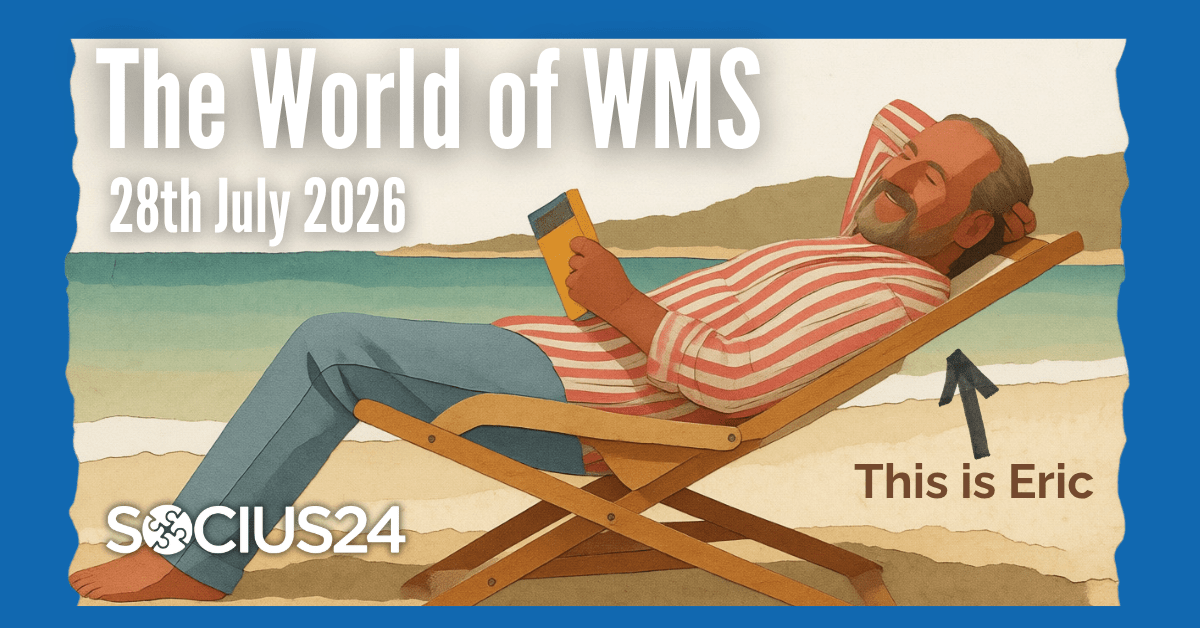
Every warehouse has an Eric.
Now, your Eric might be called Sandra, or Ali, or Pricey, or that chap who everyone just calls Tank (we don’t ask why). The name doesn’t matter. What matters is that there’s one person who has been there longer than the racking, who knows that the stock in aisle 14 bay 3 is mislabelled and that it always has been, who can tell you which supplier ships their pallets wrapped so badly that you have to double-check every single one that arrives, and who knows the precise spot where the forklift always clips the corner, if you take it even slightly too fast.
None of this is written down anywhere. It all lives entirely in Eric’s head. And Eric, bless him, is sixty-three and has started talking rather fondly, and to anyone who will listen, about his caravan in Tenby.
The maths that nobody’s mathing: an ageing workforce in numbers
Here’s a number that might make you spit your coffee (you’re welcome). According to analysis of ONS Labour Force Survey data, around one in three of the entire UK workforce is now over fifty, and that proportion has been climbing steadily for years with absolutely no sign of turning round. We’re all working later, retiring later, and getting older in our jobs.
Just to be absolutely clear, we’re talking about the whole country here, not just warehouses. But that statistic becomes a little more significant in a warehouse, because a warehouse is a physical place that asks physical things of a body. And a fifty-eight-year-old back has thoughts and feelings about being asked to bend, lift and walk fifteen thousand steps a day that have not yet occurred to a twenty-five-year-old back.
So, there’s a lot of perfectly sensible conversations happening in the industry about ergonomics. Lift assists, better pallet trucks, exoskeletons, all the kit that’s been designed to take the strain off an ageing body and keep good people on the floor for longer. And it’s all important and it’s all definitely worth doing. However, it’s only half the story, because everyone has been so busy solving the problem of Eric’s back that they are completely ignoring the far more expensive problem of Eric’s brain.
Tribal knowledge, and the day it walks out the door
There’s a lovely turn of phrase for what Eric knows. The Americans call it “tribal knowledge.” It’s all the stuff that makes your warehouse actually work, the workarounds and the quirks and the institutional memory. None of which appears in any manual or process document because it simply never occurred to anyone to write it down. It just sort of accumulated, in people, over the years.
And the thing about tribal knowledge is that it has legs. When Eric retires, that information doesn’t get handed over to his successor in a nice, neat folder. It gets into the car with him, and cheerfully drives off to Tenby.
Which means that when, three weeks later, something goes slightly wrong in a way that Eric would have sorted in about ninety seconds (and most likely without even looking up from his newspaper), suddenly nobody has the faintest idea what to do, because the one person who understood it is currently doing the crossword in his deckchair with a nice cuppa.
And he will not (let’s be honest here) be taking your call.
This is the bit that keeps operations managers up at night. Or at least it should. You can recruit a new pair of hands. Younger, fitter hands, maybe even cheaper hands. But what you can’t do is to download thirty years of “oh, that supplier always does that, just do this” into their heads on day one. That knowledge is the most valuable thing in the building, and at the moment it’s stored in the single most fragile format imaginable: a person who is going (at some point!) to leave.
Where your WMS earns its keep: capturing what Eric knows
So, this is where what we’re talking about stops being an HR problem and starts being a systems problem, which is the bit we can help you with.
A good warehouse management system is, among many other things, a place to put The Knowledge so it isn’t trapped in someone’s head. When the process is built into the system, the right way to do a job is the way the system walks you through it, rather than the way Eric happened to remember on his way past. The new starter follows the screen and gets it right, because the system already knows what Eric knew. The quirks have become rules. The workarounds have become steps. The thirty years of hard-won “the way we do it here” stops being folklore and instead, can become something tangible that the operation actually owns.
It won’t retire, and it is deeply unlikely to develop a sudden passion for caravanning.
It also does the other half of the job, the one the ergonomics people are rightly worried about. A well-run system means less aimless walking, less hunting around for stock that isn’t where someone swore it was, less heavy mental juggling of where everything is. Which makes the work less of a slog for a body that’s been doing it for forty years, and rather more appealing to the new starter you’re trying to hang on to as well. You end up keeping your older people for longer because the job has stopped breaking them, and you also get to onboard the younger ones faster, because the system is teaching them what to do.
This isn’t a reason to push anyone out
Let me be crystal clear about something, because it would be really easy to read this the wrong way. None of this is an argument for gently ushering your experienced people out of the door now that the system “knows what they know.”
No, no, nope. No. What we’re saying is quite the opposite.
The system captures the what, but Eric is still the one who understands the why, and who spots the thing that’s about to go wrong before it does. The goal is to keep your best people happy, supported and on the floor for as long as they want to be there, while making very sure that the day they do finally head off to Tenby, they’ll be taking their fishing rod with them, rather than the entire operating knowledge of your warehouse.
If you’ve got an Eric or two, and the thought of them leaving brings you out in a cold sweat, it might be worth a conversation about getting what’s in their head into your system while they’re still around to help. Book an obligation-free discovery call.
Ageing warehouse workforce: common questions
What is tribal knowledge in a warehouse?
Tribal knowledge, also called institutional or tacit knowledge, is everything that your experienced people know, but nobody ever wrote down. Which locations are mislabelled. Which supplier’s pallets need checking every time. Which processes have a workaround that has been running so long it looks like the actual process. This kind of information accumulates in people over years, and it exists in no manual anywhere.
Why does an ageing warehouse workforce matter?
Analysis of ONS Labour Force Survey data puts around one in three UK workers over the age of fifty, and that share has been rising for three decades. For a warehouse this cuts two ways. There is the physical side, which is the ergonomics conversation the industry is already having. Then there is the part nobody talks about, which is that decades of undocumented operational knowledge are residing in the brains of people who are getting closer to retirement.
How do you capture warehouse knowledge before someone retires?
Put the process into the system rather than into a document. When your WMS directs the task, the right way to do the job becomes the sequence on the screen, so workarounds become configured steps and quirks become rules. A new starter following the screen gets it right without having to have absorbed thirty years of context first. Documentation and shadowing both help, but neither one will be able to survive a retirement the way a configured process would.
Can a WMS replace experienced warehouse staff?
No. A WMS captures what gets done and in what order. It does not capture why the process exists, and it will not spot a problem that has not happened yet. Your experienced people still supply the judgement, the exception handling, and the knack of noticing that something is about to go wrong. Getting their knowledge into the system protects the operation against losing it. It is not an argument for having fewer of them.
How does a WMS help with warehouse staff retention?
By taking out the parts of the job that grind people down. System-directed work means less walking, less hunting for stock that isn’t where someone swore it was, and less mental juggling of where everything is. That is easier on a body that has been doing the work for forty years, and it gets a new starter productive faster, because the system supplies the process instead of expecting them to pick it up from whoever is standing nearest.
If you’ve enjoyed this article, subscribe for free to our weekly Newsletter
– The World of WMS –
for more of the same great information!